Tu Libro BoliviaBuscar
Iniciar sesiónCrear cuenta
Tu Libro Bolivia

Impresión de libros bajo demanda. Cualquier libro, impreso y enviado a tu ciudad.

Categorías

FicciónLiteratura LatinoamericanaHistoriaPsicologíaDesarrollo PersonalFilosofía

Mejores libros

Ficción latinoamericanaDesarrollo personalCiencia ficciónFilosofíaVer todas las listas →

Información

Buscar librosCómo comprar libros en BoliviaLibros para emprendedoresQué libro regalarImprimir mi propio libroSobre nosotrosRegala un libroCómo funcionaPreguntas frecuentesTérminos y condicionesCatálogo: Open Library ↗

© 2026 Tu Libro Bolivia. Hecho en Bolivia.

  1. Inicio
  2. /
  3. Mejores libros de filosofía

Los mejores libros de filosofía para imprimir en Bolivia

Filosofía no es solo para académicos. Marco Aurelio, Séneca y Epicteto escribieron para personas que querían vivir mejor. Hoy, el estoicismo y otras corrientes filosóficas están resurgiendo porque ofrecen herramientas prácticas para la vida moderna. Estos son los libros esenciales.

A History of Political Theory
#1
A History of Political Theory

George Holland Sabine · 871 páginas

This history of political theory is written in the light of the hypothesis that theories of politics are themselves a part of politics. In other words, they do not refer to an external reality but are produced as a normal part of the social milieu in which politics itself has its being. The reflection upon the ends of political action, upon the means of achieving them, upon the possibilities and necessities of political situations, and upon the obligations that political purposes impose, is an intrinsic element of the whole political process. Such thought evolves along with the institutions, the agencies of government, the moral and physical stresses to which it refers and which - one likes at least to believe - it, in some degree, controls.

Bs. 204

Gödel, Escher, Bach
#2
Gödel, Escher, Bach

Douglas R. Hofstadter · 777 páginas

Winner of the Pulitzer Prize A metaphorical fugue on minds and machines in the spirit of Lewis Carroll Douglas Hofstadter's book is concerned directly with the nature of "maps" or links between formal systems. However, according to Hofstadter, the formal system that underlies all mental activity transcends the system that supports it. If life can grow out of the formal chemical substrate of the cell, if consciousness can emerge out of a formal system of firing neurons, then so too will computers attain human intelligence. Gödel, Escher, Bach is a wonderful exploration of fascinating ideas at the heart of cognitive science: meaning, reduction, recursion, and much more.

Bs. 184

Sociologia de La Educacion
#3
Sociologia de La Educacion

Mariano F. Enguita · 764 páginas

Bs. 181

I Ching
#4
I Ching

Richard Wilhelm · 740 páginas

A translation of the early document of Chinese philosophy with explanatory notes.

Bs. 176

Der Zauberberg
#5
Der Zauberberg

Thomas Mann · 729 páginas

Jim Benbow struggles to keep all the beef on the Hat Ranch and keep his girl, Connie Dale.

Bs. 174

Le Deuxième Sexe
#6
Le Deuxième Sexe

Simone de Beauvoir · 728 páginas

**The Second Sex** (French: *Le Deuxième Sexe*) is a 1949 book by the French existentialist philosopher Simone de Beauvoir, in which the author discusses the treatment of women throughout history. Beauvoir researched and wrote the book in about 14 months between 1946 and 1949. She published the work in two volumes: *Facts and Myths* (*Les faits et les mythes*), and *Lived Experience* (*L’expérience vécue*). Some chapters first appeared in the journal *Les Temps modernes*. One of Beauvoir’s best-known books, *The Second Sex* is often regarded as a major work of feminist philosophy, and as the starting inspiration point of second-wave feminism.

Bs. 174

The Open Society and Its Enemies (1+2)
#7
The Open Society and Its Enemies (1+2)

Karl Popper · 713 páginas

An open society provides its citizens with a mechanism for changing government; a closed society doesn't, forcing its citizens to rely on extra-legal revolution. Popper analyzes the open-closed society debate using three exemplars of closed-society advocacy: Plato, Hegel (and wow, does Popper hate on Hegel), and Marx. The main analytical viewpoints are historicist (backward-looking, utopian) motivations for closed societies and rational (forward-looking, empirical) motivations for open societies.

Bs. 171

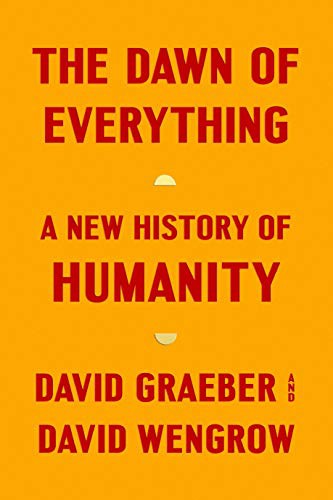
The Dawn of Everything
#8
The Dawn of Everything

David Graeber · 704 páginas

Drawing on pathbreaking research in archaeology and anthropology, the authors show how history becomes a far more interesting place once we learn to throw off our conceptual shackles and perceive what's really there. If humans did not spend 95 percent of their evolutionary past in tiny bands of hunter-gatherers, what were they doing all that time? If agriculture, and cities, did not mean a plunge into hierarchy and domination, then what kinds of social and economic organization did they lead to? The answers are often unexpected, and suggest that the course of human history may be less set in stone, and more full of playful, hopeful possibilities, than we tend to assume

Bs. 169

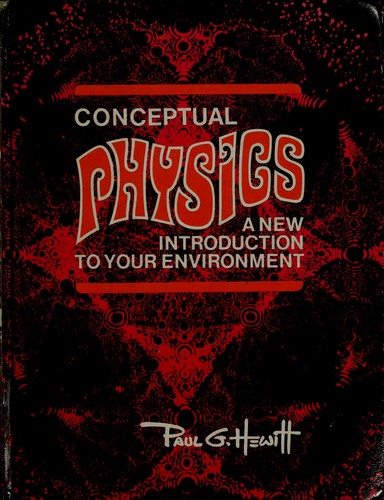
Conceptual physics
#9
Conceptual physics

Paul G. Hewitt · 682 páginas

Bs. 164

How the Mind Works
#10
How the Mind Works

Steven Pinker · 667 páginas

"Presented with extraordinary lucidity, cogency and panache...Powerful and gripping...To have read [the book] is to have consulted a first draft of the structural plan of the human psyche...a glittering tour de force" - Spectator "Why do memories fade? Why do we lose our tempers? Why do fools fall in love? Pinker's objective in this erudite account is to explore the nature and history of the human mind...He explores computations and evolutions, and then considers how the mind lets us "see, think, feel, interact, and pursue higher callings like art, religion and philosophy" - Sunday Times

Bs. 161

Psychologische Typen
#11
Psychologische Typen

Carl Gustav Jung · 654 páginas

Overview: The book is rich in material drawn from literature, aesthetics, religion, and philosophy. The extended chapters that give general descriptions of the types and definitions of Jung's principal psychological concepts are key documents in analytical psychology.

Bs. 158

Antifragile
#12
Antifragile

Nassim Nicholas Taleb · 639 páginas

Just as human bones get stronger when subjected to stress and tension, many things in life benefit from stress, disorder, volatility, and turmoil. In this title, the author shows that highly improbable and unpredictable events underlie almost everything about our world. Taleb tells us how to live in a world that is unpredictable and chaotic, and how to thrive during moments of disaster.

Bs. 155

Institutio Christianae religionis
#13
Institutio Christianae religionis

Jean Calvin · 634 páginas

Extracts from Calvin's commentaries topically arranged.

Bs. 154

Collapse
#14
Collapse

Jared M. Diamond · 628 páginas

"In his Pulitzer Prize-winning bestseller Guns, Germs, and Steel, Jared Diamond examined how and why Western civilizations developed the technologies and immunities that allowed them to dominate much of the world. Now, Diamond probes the other side of the equation: What caused some of the great civilizations of the past to collapse into ruin, and what can we learn from their fates?" "As in Guns, Germs, and Steel, Diamond weaves an all-encompassing global thesis through a series of historical-cultural narratives. Moving from the prehistoric Polynesian culture on Easter Island to the formerly flourishing Native American civilizations of the Anasazi and the Maya, the doomed medieval Viking colony on Greenland, and finally to the modern world, Diamond traces a fundamental pattern of catastrophe, spelling out what happens when we squander our resources, when we ignore the signals our environment gives us, and when we reproduce too fast or cut down too many trees. Environmental damage, cl...

Bs. 153

The structure of science
#15
The structure of science

Ernest Nagel · 618 páginas

The philosophy of physics.

Bs. 151

Más listas de libros
ficción latinoamericana
ficción
desarrollo personal
psicología
historia
ciencia ficción
literatura española
realismo mágico
cuentos